
The department store. A grand temple to consumerism and conspicuous consumption.
Prior to the 20th century, the majority of clothing was produced by women either at home or professionally as seamstresses and dressmakers. As industrialization reshaped the American economy, the production of clothing gradually shifted from the home into factories. The emergence of a steady ready-to-wear clothing industry eliminated the role of artisan labor in production. Increased urbanization in industrialized cities such as Schenctady, created new, diverse class systems and consumer markets for the distribution and consumption of goods, and in particular, fashion. Evolving out of the urban dry goods store, department stores revolutionized the way in which products were sold and consumed.
Department stores were more than just shopping centers, they provided a social experience, designed to be an activity women could participate in, often with food and entertainment. Women were the primary customers and most of the items sold catered to their interests and needs such household wares, cosmetics, clothing, millinery, fabrics, and sewing goods. Here, a ready source of fashions at affordable prices were available, providing a “one-stop” shopping experience, away from home and the company of men. The fashion industry blossomed under this new way of selling, forging a new relationship between itself and marketing to the female consumer. While fashion plates were still used extensively to market fashion trends, window displays created a new way to present fashion to customers. Fashion magazines, which had begun to rely heavily on photography, promoted new styles as well as techniques for acquiring a fashionable look; makeovers are still a staple of women’s magazines today.
The transformation of the production and consumption of clothing coincided with major changes in women’s lives. The early 20th century was a particularly important time period in women’s history. More women were employed than ever before, which meant they had disposable income and could make discretionary purchases. Women were more actively engaged in public life, venturing into new spheres and realms of influence. The consumer revolution was under way and clothing, along with accessories and cosmetics, were heavily promoted through magazines, film, department stores, and fashion photography. Fashion became associated with women’s new freedom, independence, individuality, and sexuality.
1 / 3
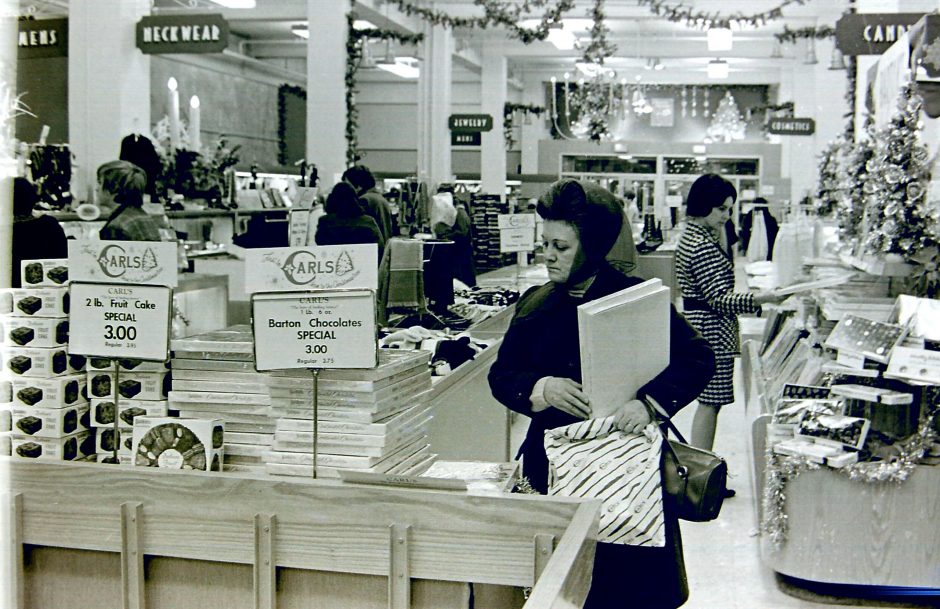
Shoppers at the Carl Co. department store, Schenectady, c. 1950s
2 / 3
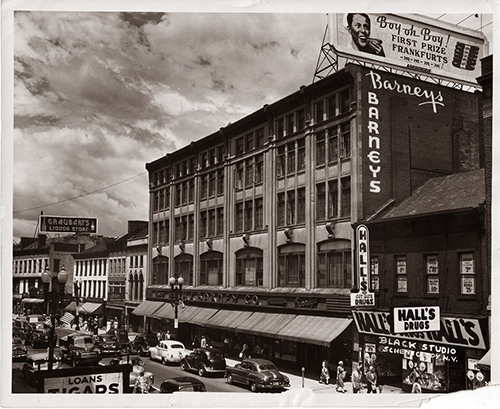
Barneys deaprtment store, Schenectady, NY, c. 1950s
3 / 3
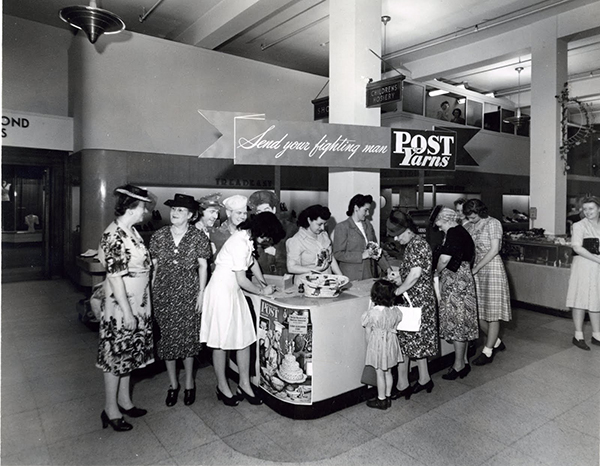
Shoppers at the Carl Co. department store, Schenectady, NY, 1940s